How to Listen
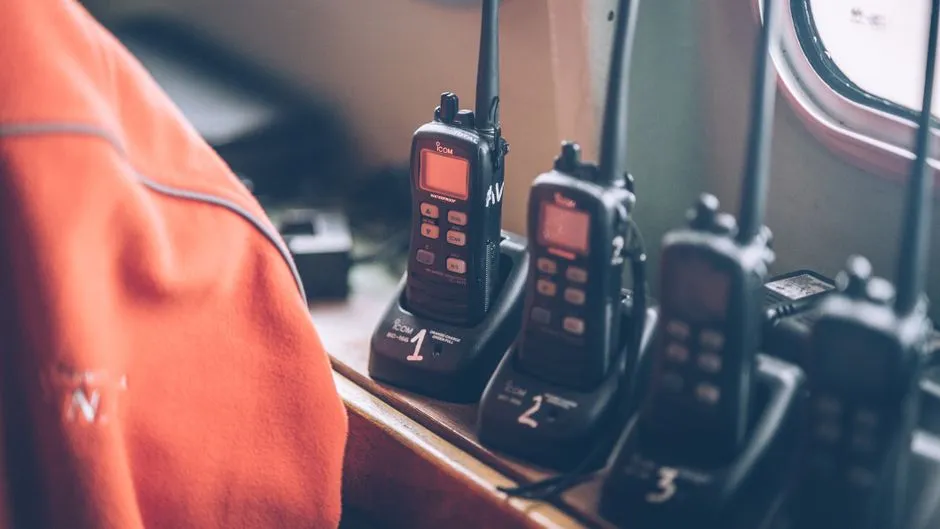
Listening to fire and EMS dispatch traffic is a low-cost way to understand what's happening in your community. This guide walks through what you need, the bands fire and EMS use, and the technical concepts (tones, NACs, modes, trunked systems) that show up in every channel listing on Find Routing.
What you need
For analog VHF and UHF traffic — which still covers a lot of fire and EMS dispatch in the United States, especially in smaller counties and rural areas — almost any modern scanner works. A handheld like the Uniden BC125AT (about $100) or the Whistler WS1040 will receive everything in the 154 MHz fire band, the 460 MHz UHF band, and the 800 MHz public-safety block, all in analog mode.
For digital traffic — primarily P25 Phase 1 and P25 Phase 2 (TDMA) used by statewide trunked systems like Pennsylvania STARNet, Michigan MPSCS, North Carolina VIPER, Ohio MARCS, and Florida SLERS — you need a digital-capable scanner. The Uniden SDS100/SDS200 and the Whistler TRX-1/TRX-2 are the current standard recommendations. They cost more (typically $400–$700) but they will follow trunked talkgroups, decode P25 audio, and let you scan by location with the built-in or downloadable database.
For very rural fire-only listening on a budget, an SDR dongle (RTL-SDR, about $30) plus a laptop running SDR# or SDRTrunk will get you started. The audio quality is fine and you can graduate to a hardware scanner once you know what you want to hear.
Bands you'll see on Find Routing
- VHF Low Band (30–50 MHz) — Mostly retired for fire/EMS but still in use in some rural states for long-range repeaters.
- VHF High Band (138–174 MHz) — The historic fire band. Most of the NIFOG VFIRE and VMED channels live here. Volunteer fire departments still use this band heavily.
- UHF (450–470 MHz) — Used for the EMS-to-hospital med channels (UMED38–47), interop tactical channels (UTAC41–43), and many city fire departments' tactical channels.
- 700 MHz (763–775 MHz) — Modern P25 digital interop ladder, opened up after the DTV transition. The 7CALL and 7TAC channels.
- 800 MHz (806–869 MHz) — The original public-safety mutual aid band. Many statewide trunked systems live here. The 8CALL and 8TAC channels are the analog mutual aid set.
Tones, NACs, and squelch
You'll see a "Tone" or "Tone / NAC" column in every Find Routing channel listing. On analog channels, the tone is a CTCSS (Continuous Tone-Coded Squelch System) sub-audible tone in hertz — for example, 156.7 Hz is the most common tone you'll see in the fire band. The receiver only opens its speaker when a transmission carrying that tone is heard, which keeps far-away co-channel users from breaking your squelch. On P25 channels, the equivalent is a NAC (Network Access Code), typically expressed as a hex value like NAC 293.
You can almost always set your scanner to "carrier squelch" (CSQ) and ignore the tone, in which case you'll hear everything on the channel including distant interference. Programming the tone keeps your scanner quiet except when local traffic is actually present.
Modes
"Analog FM" is narrowband (12.5 kHz) frequency modulation, the standard for VHF/UHF public safety since narrowbanding in 2013. "P25 Phase 1" is FDMA digital with 12.5 kHz channels — most statewide trunked systems use this. "P25 Phase 2" is TDMA digital with two voice slots per 12.5 kHz channel — increasingly common on newer build-outs.
Trunked systems
A trunked system isn't a single channel — it's a pool of frequencies that the system dynamically assigns to talkgroups (logical channels) on demand. When an agency keys up on talkgroup "Fire Dispatch," the system assigns whichever working channel is free at that moment, and the receiving scanner has to follow the assignment. Modern digital scanners do this automatically once you've programmed the system's control channel and the talkgroups you want to hear.
What to program first
Start with your county page on Find Routing for the local dispatch channels. Add the statewide mutual aid channels from your state page. Add the full NIFOG nationwide bank from our channels page — those are the same wherever you travel. That's enough to monitor effectively in your home area and in any other state you happen to be passing through.